
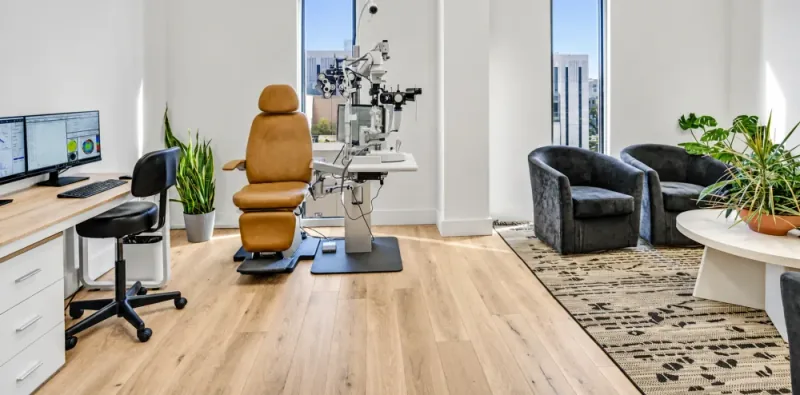
Myopia Management Specialists in Charlotte
Myopia, or near-sightedness, is an increasingly prevalent medical concern among children. Rapid increases in prolonged near work (digital device use, homework, and handheld screens), coupled with decreased natural outdoor light exposure and genetic predispositions, have caused childhood myopia rates to accelerate significantly.
Myopia impacts not just a child’s clarity in the classroom, but also hinders sports participation, extracurricular activities, and childhood self-confidence. More critically, progressive myopia is not simply an inconvenience that can be fixed by stronger eyeglasses each year.
As myopia progresses, the physical eyeball elongates abnormally (increased axial length). This stretches and thins the delicate retinal tissue at the back of the eye, significantly multiplying your child’s lifetime risk for severe vision-threatening ocular complications in adulthood—including retinal detachment, myopic maculopathy, early-onset glaucoma, and cataracts.
Fortunately, over the past decade there has been a dramatic leap forward in peer-reviewed scientific research on pediatric myopia. Today, evidence-based, FDA-approved myopia control treatments can actively slow or halt abnormal eye elongation, safeguarding your child's sight for the future.

Looking for More Information on Myopia Management?
There are three primary clinical modalities proven to slow or arrest the progression of pediatric nearsightedness:
- MiSight® 1 day: Daily disposable soft contact lenses with dual-focus optics.
- Orthokeratology (Ortho-K): Precision overnight corneal reshaping retainer lenses.
- Low-Dose Atropine: Specialized compounded nightly eye drops (0.05% concentration).
Determining the ideal therapy depends on your child's age, baseline prescription, corneal shape, sports involvement, and daily habits. In certain aggressive cases, combination therapy (e.g. Ortho-K plus Atropine) may be prescribed to optimize progression reduction.
Are Contact Lenses Safe for Children?
This is the most common question parents ask. Extensive multi-center clinical trials—including the landmark Contact Lens Assessment in Youth (CLAY) study and the ReCSS study—have conclusively proven that children ages 8–12 have lower rates of contact lens complications than teenagers and adults. Children are remarkably diligent wearers when taught proper hygiene routines.
Because myopia progresses most aggressively between ages 6 and 9, early intervention is critical to prevent high myopia and permanently reduce long-term ocular risks.
What Happens During the Initial Examination?
- Cycloplegic Refraction: To pinpoint the true, unaccommodated refractive error.
- Pentacam Optical Biometry: High-precision axial length measurement down to 0.01 mm to establish a growth baseline.
- Corneal Tomography: 240,000-point 3D corneal mapping to evaluate candidacy for Ortho-K and custom optics.
- Binocular Vision & Meibography: Comprehensive assessment of eye tracking, focusing coordination, and tear film health.
- Application & Removal Training: A gentle, patient, one-on-one session where children master lens insertion and hygienic care.
Three Proven Options for Myopia Control
Every child's eyes and lifestyle are unique. Our specialists evaluate all clinical parameters to design a treatment protocol tailored for lasting visual health.
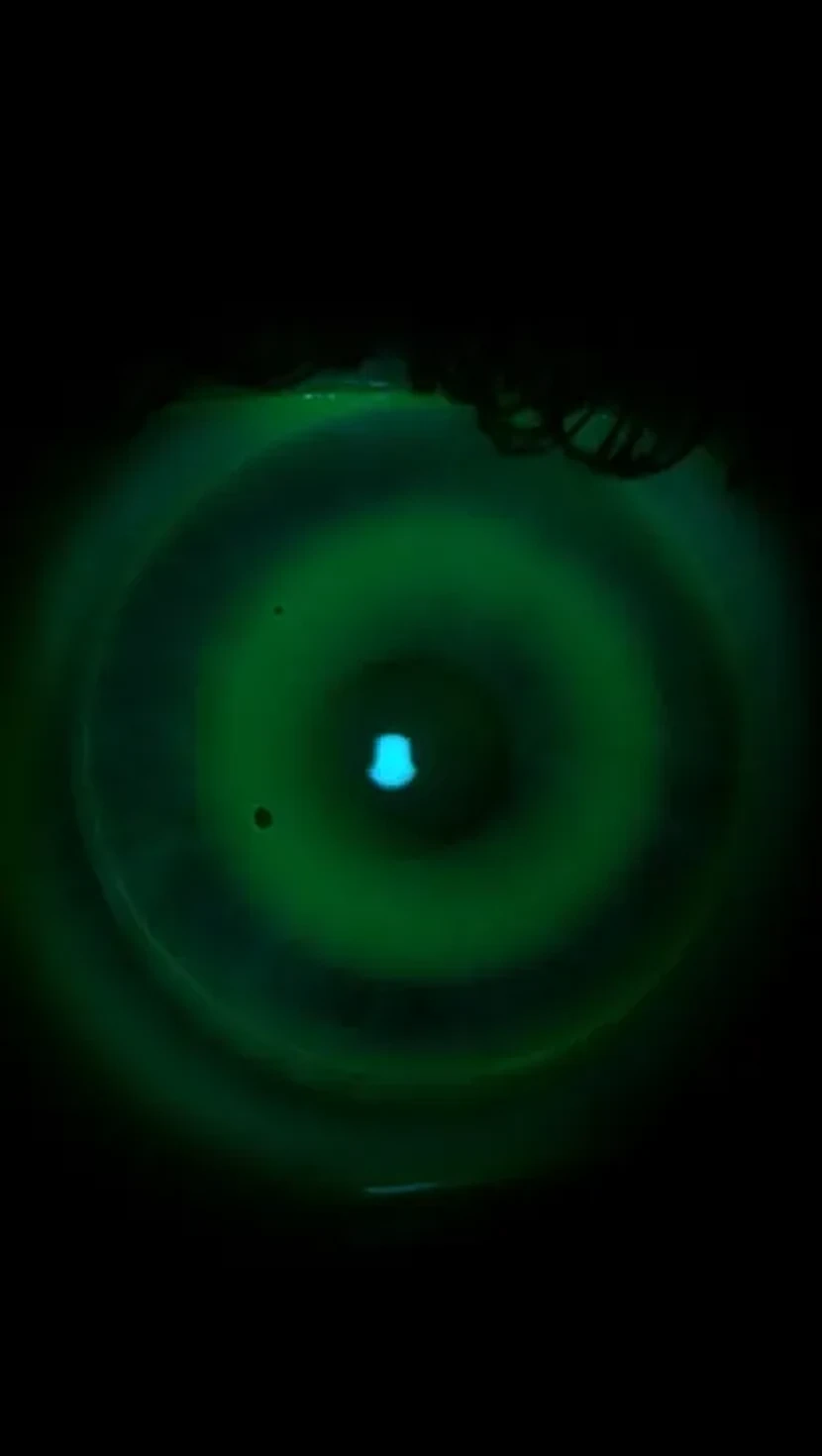 Overnight Retainers
 Orthokeratology (Ortho-k)
- Worn strictly during sleep to gently reshape the corneal surface via fluid hydraulics.
- Allows children to enjoy crisp, clear 20/20 vision throughout the day without glasses or daytime contact lenses.
- Ideal for kids active in competitive sports, swimming, gymnastics, or outdoor athletics.
- Lenses stay safely at home under parental supervision, eliminating loss at school.
 FDA Approved
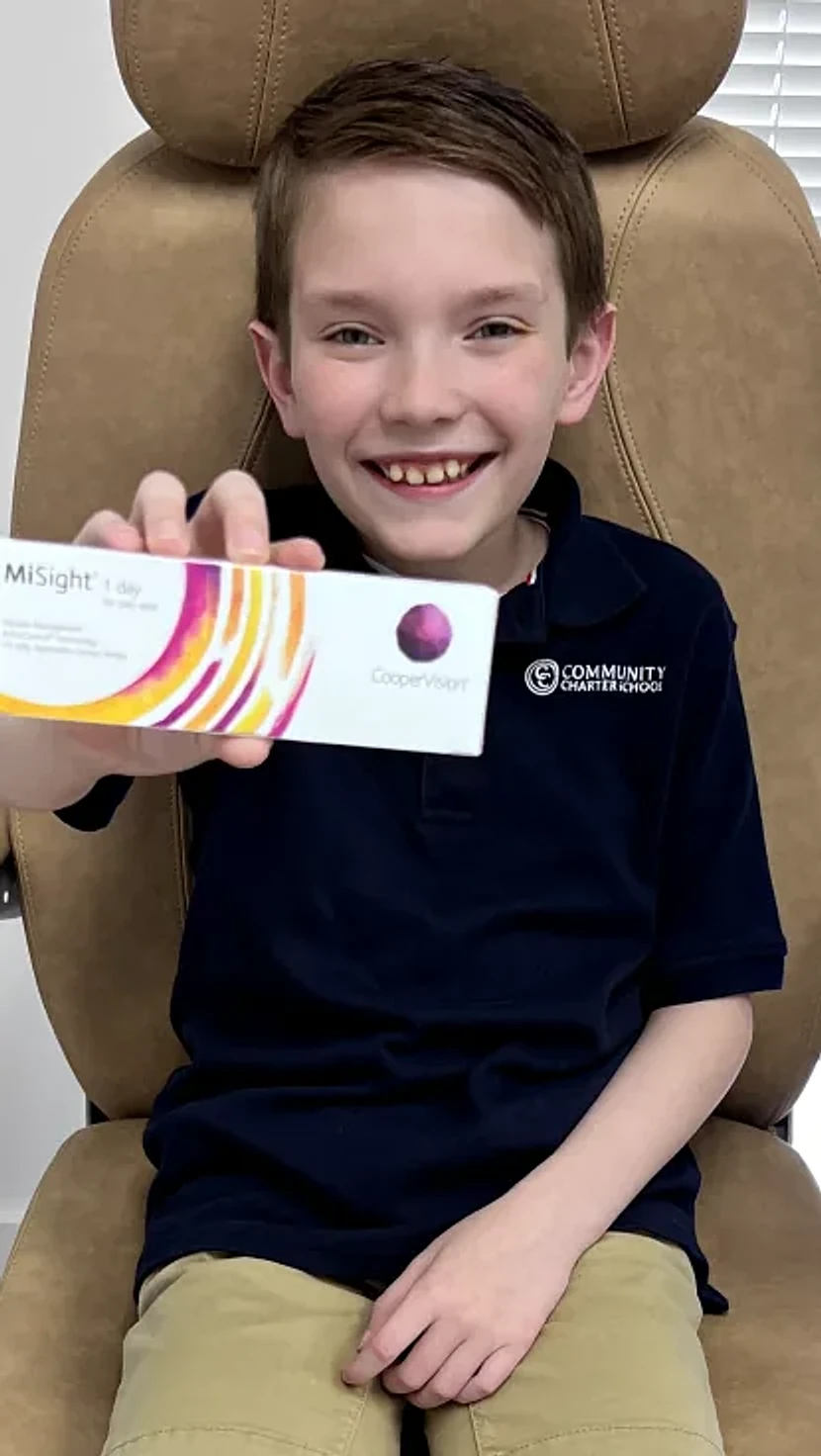
 MiSight® 1 day
- The first FDA-approved soft contact lens specifically designed and proven to slow myopia progression in children.
- Dual-focus concentric optical zones proven in 6-year clinical trials to slow myopic progression by an average of 59%.
- 23% of children showed complete stability of myopia over the multi-year study period.
- Single-use daily disposable format: maximum ocular hygiene with zero cleaning solutions required.
 Eye Drops
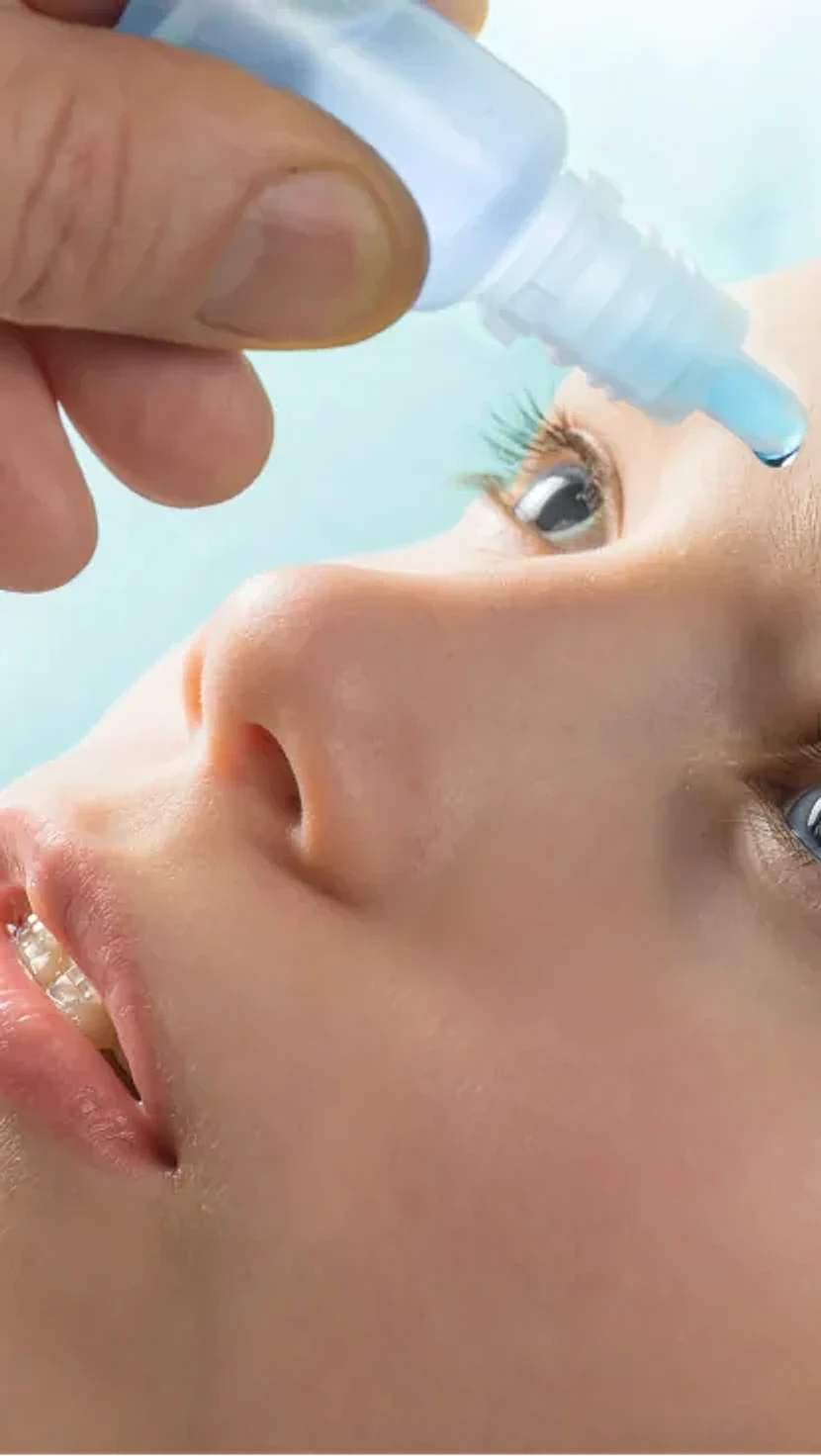
 Low-Dose Atropine (0.05%)
- Nightly compounded low-dose eye drop (0.05% concentration) clinically proven in LAMP studies to slow progression by over 50%.
- Acts directly on the scleral and neurochemical signaling receptors that drive abnormal axial elongation.
- Ideal for younger children who are not yet ready for contact lens application.
- Can be paired in combination with Ortho-K or MiSight for patients with rapid prescription progression.
Why Choose the Charlotte Contact Lens Institute for Myopia Management?
The Team
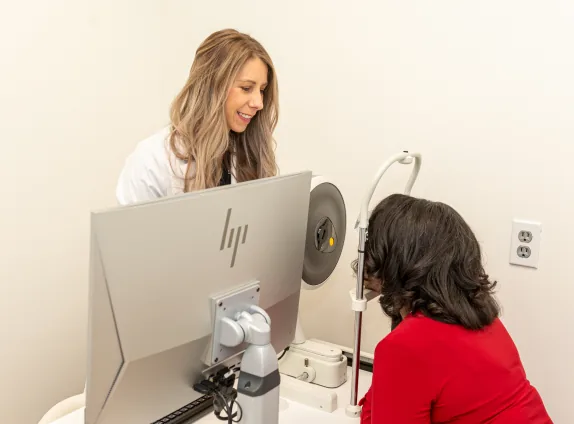
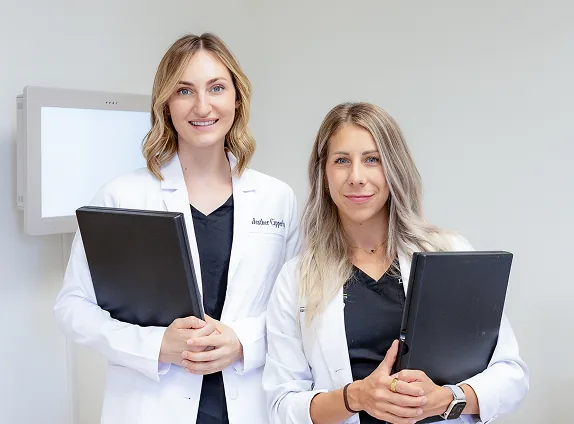
The team at the Charlotte Contact Lens Institute have experience with offering myopia management treatment for hundreds of children, and are recognized experts in custom myopia control.
Advanced Technology
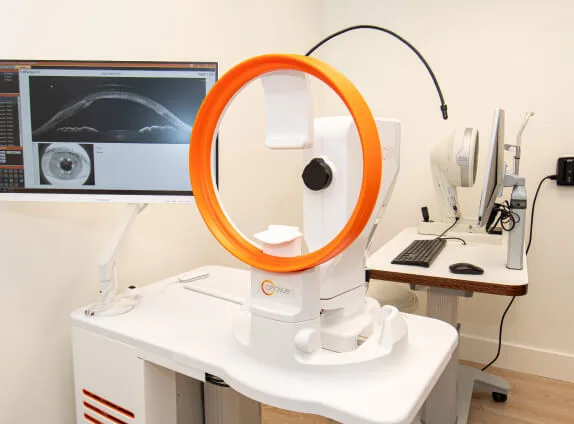
Our office is one of a few practices in the country equipped with the Pentacam AXL Wave and Optovue Solix OCT, measuring axial length changes down to 0.01 mm over time.
Unlimited Answers
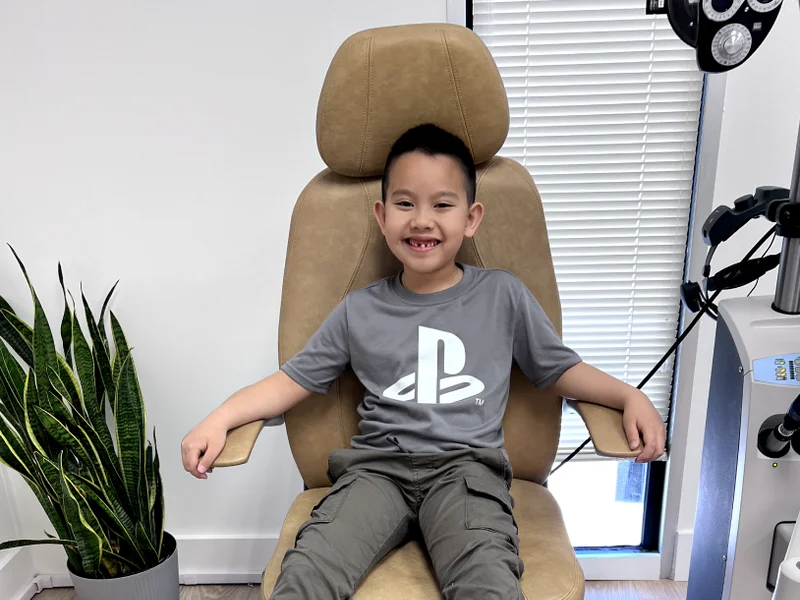
We allow generous 90–120 minute appointments for thorough comprehensive exams and plenty of one-on-one time for answering all parent and child questions. No rushing here.
We Focus on Myopia
Myopia management is one of the two core clinical pillars of our entire practice. We receive referrals from doctors across North and South Carolina for our pediatric expertise.
Access to the Doctor
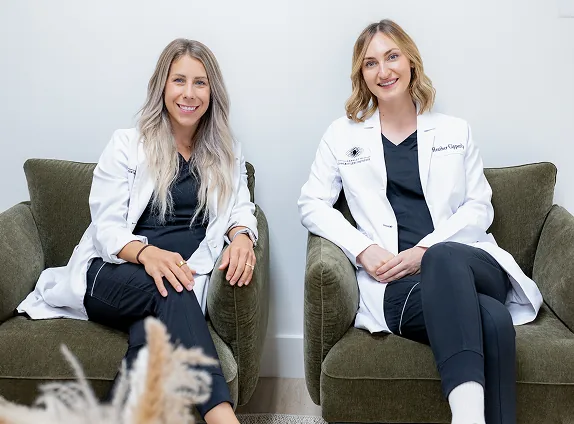
Our doctors are directly accessible to answer questions you have between visits, ensuring your child receives continuous guidance, reinforcement, and the best possible outcome.
Affordability
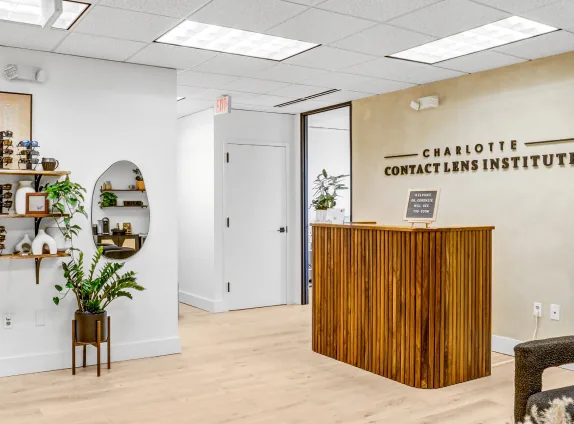
We keep our overhead costs transparent and offer competitive pricing with flexible monthly payment plans, Cherry™ financing, HSA, and FSA account acceptance.
Protect Your Child's Vision with Expert Myopia Management
Our doctors are nationally recognized for their clinical leadership in pediatric myopia control, regularly lecturing to hundreds of optometrists across the country. One of the greatest advantages of visiting our Charlotte institute is the amount of one-on-one time with the doctor—providing ample opportunity to ask questions, explore all evidence-based options, and establish a personalized treatment plan.
Have questions regarding treatment options or insurance coverage? Our team is available for phone consultations and direct inquiries.

Citations for Scientific Reviews on Myopia Management
Our clinical protocols are strictly grounded in rigorous, peer-reviewed ophthalmic research and randomized clinical trials.
- Modjtahedi, Bobeck S., et al. “Reducing the global burden of myopia by delaying the onset of myopia and reducing myopic progression in children: the Academy’s Task Force on Myopia.” Ophthalmology 128.6 (2021): 816-826.
- Huang, Juerong, et al. “Myopia and Depression among Middle School Students in China—Is There a Mediating Role for Wearing Eyeglasses?” International Journal of Environmental Research and Public Health 19.20 (2022): 13031.
- Hu, Yin, et al. “Association of age at myopia onset with risk of high myopia in adulthood in a 12-year follow-up of a Chinese cohort.” JAMA Ophthalmology 138.11 (2020): 1129-1134.
- Dias, Lynette, et al. “Myopia, contact lens use and self-esteem in children and teenagers.” Ophthalmic and Physiological Optics 33.5 (2013): 573-580.
- Chalmers RL, Wagner H, Mitchell GL, et al. “Age and Other Risk Factors for Corneal Infiltrative and Inflammatory Events in Young Soft Contact Lens Wearers from the Contact Lens Assessment in Youth (CLAY) Study.” Investigative Ophthalmology & Visual Science 52.9 (2011): 6690-6696.
- Chalmers, Robin L., et al. “Adverse event rates in the retrospective cohort study of safety of paediatric soft contact lens wear: the ReCSS study.” Ophthalmic and Physiological Optics 41.1 (2021): 84-92.
- Chamberlain P, Peixoto-de-Matos SC, Logan NS, et al. “A 3-Year Randomized Clinical Trial of MiSight Lenses for Myopia Control.” Optometry and Vision Science 96.8 (2019): 556-567.
- Chua, Sharon YL, et al. “Age of onset of myopia predicts risk of high myopia in later childhood in myopic Singapore children.” Ophthalmic and Physiological Optics 36.4 (2016): 388-394.
- Bullimore, Mark A., et al. “The risks and benefits of myopia control.” Ophthalmology 128.11 (2021): 1561-1579.
- Bullimore, Mark A., and Noel A. Brennan. “Myopia control: why each diopter matters.” Optometry and Vision Science 96.6 (2019): 463-465.
- Si, Jun-Kang, et al. “Orthokeratology for myopia control: a meta-analysis.” Optometry and Vision Science 92.3 (2015): 252-257.
- Chamberlain, Paul, et al. “Long-term effect of dual-focus contact lenses on myopia progression in children: a 6-year multicenter clinical trial.” Optometry and Vision Science 99.3 (2022): 204-212.
- Yam, Jason C., et al. “Three-Year Clinical Trial of Low-Concentration Atropine for Myopia Progression (LAMP) Study: Continued Versus Washout Phase 3 Report.” Ophthalmology 129.3 (2022): 308-321.