
How Scleral Lenses Improve Vision for Patients With Post-Surgery Dry Eye
Dry eye symptoms after eye surgery can be frustrating and unexpected. Many patients notice burning, fluctuating vision, light sensitivity, or discomfort months—or even years—after procedures like LASIK, PRK, or cataract surgery.
When artificial tears and standard treatments are not enough, scleral lenses are increasingly becoming an effective solution for both comfort and visual clarity.
At the Charlotte Contact Lens Institute, we help post-surgery patients regain stable vision and eye comfort using advanced specialty lens designs.
- Why Dry Eye Is Common After Eye Surgery
Eye surgeries can temporarily or permanently affect the corneal nerves and tear film. This disruption may lead to reduced tear production or poor tear quality, causing symptoms such as:
- Dryness or burning
- Fluctuating or blurry vision
- Sensitivity to light
- Eye fatigue
- Discomfort with glasses or soft contacts
For some patients, these symptoms persist long term and interfere with daily activities.
- Why Glasses and Soft Contacts Often Fall Short
Glasses do not address the underlying surface dryness that causes visual instability.
Soft contact lenses may actually worsen symptoms by absorbing tears and increasing evaporation, leading to discomfort and inconsistent vision—especially in post-surgical eyes.
This is where scleral lenses offer a unique advantage.
- How Scleral Lenses Help Post-Surgery Dry Eye
- Key Benefits for Post-Surgery Patients
- Constant hydration of the corneal surface
- Reduced dryness and irritation
- Improved visual stability
- Protection of sensitive post-surgical tissue
- Greater comfort for extended wear
Because of these benefits, scleral lenses are often recommended for patients seeking post lasik contacts charlotte NC who continue to struggle with dry eye symptoms.
- Improved Vision Beyond Comfort
In addition to hydration, scleral lenses create a smooth optical surface that neutralizes minor corneal irregularities caused by surgery. This can result in:
- Sharper vision
- Reduced glare and halos
- Better contrast sensitivity
- More reliable vision throughout the day
Many patients report clearer, more comfortable vision than they experienced with glasses or soft lenses after surgery.
- Who Is a Good Candidate for Scleral Lenses After Surgery?
Scleral lenses may be ideal for patients who:
- Have chronic dry eye after LASIK, PRK, or cataract surgery
- Experience fluctuating or unstable vision
- Cannot tolerate soft contact lenses
- Have surface irregularities or sensitivity
- Need both comfort and visual improvement
A comprehensive specialty lens evaluation is essential to determine the best approach.
- Why Choose the Charlotte Contact Lens Institute
Our practice focuses exclusively on specialty contact lenses and complex eye conditions.
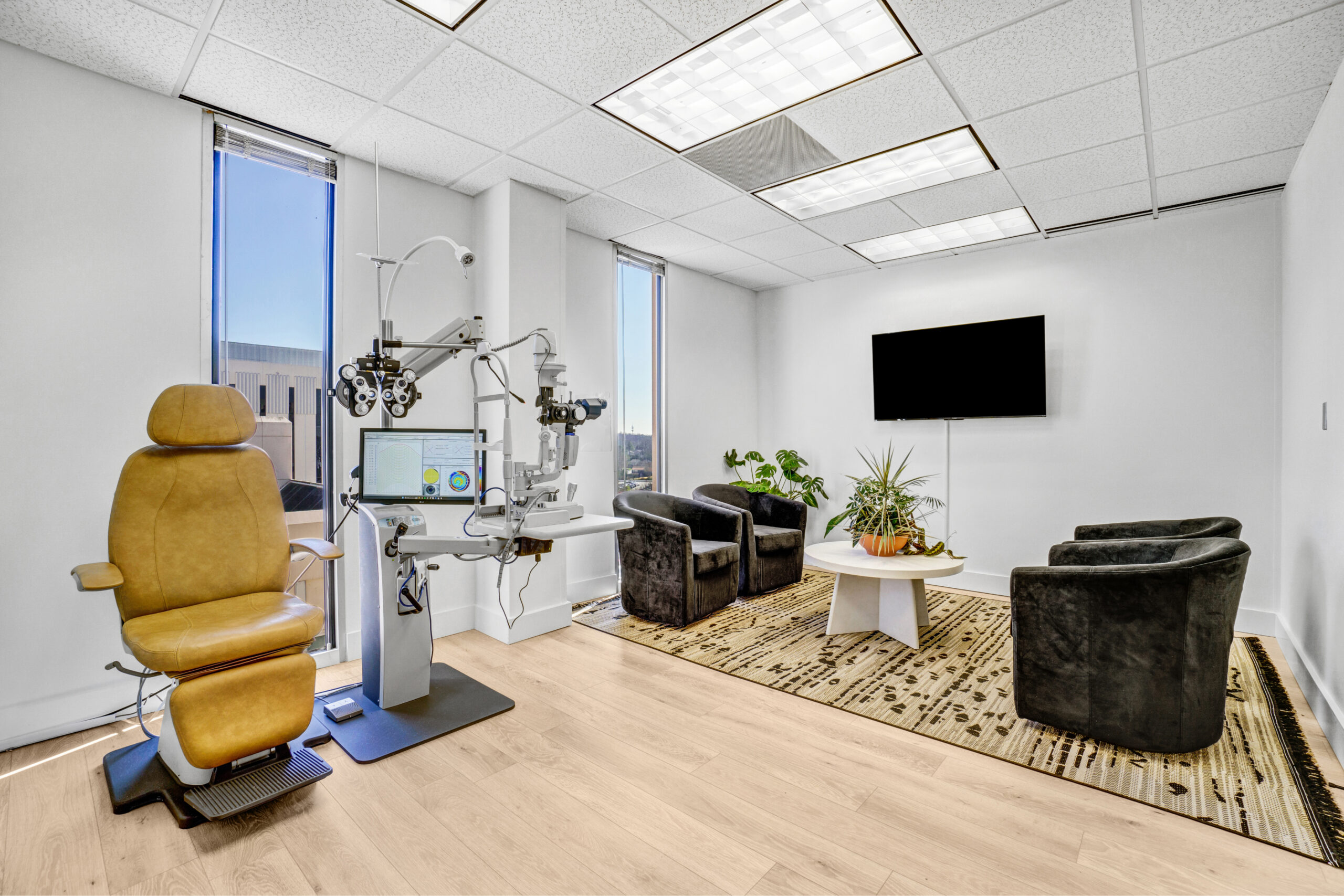
Using advanced diagnostic tools and customized fittings, we help post-surgical patients achieve long-term comfort and functional vision—even when other treatments have failed.
- Frequently Asked Questions
Why does dry eye occur after eye surgery like LASIK?
Eye surgery can affect corneal nerves that play an important role in tear production. When these nerves are disrupted, tear quality and quantity may decrease, leading to ongoing dryness and irritation.
Can scleral lenses help if artificial tears are not working?
Yes. Scleral lenses continuously bathe the eye in a layer of fluid, providing long-lasting hydration that eye drops alone cannot achieve.
Are scleral lenses comfortable for post-surgery patients?
Most patients find scleral lenses very comfortable because they do not touch the sensitive corneal surface and instead rest on the white part of the eye.
Do scleral lenses only improve comfort or vision as well?
They improve both. By creating a smooth optical surface, scleral lenses can enhance clarity, reduce glare, and stabilize vision throughout the day.
How long does it take to get fitted for scleral lenses?
Who should consider post-surgery specialty contact lenses?
Patients with persistent dryness, fluctuating vision, or discomfort after eye surgery may benefit from a specialty lens consultation to explore advanced options.